
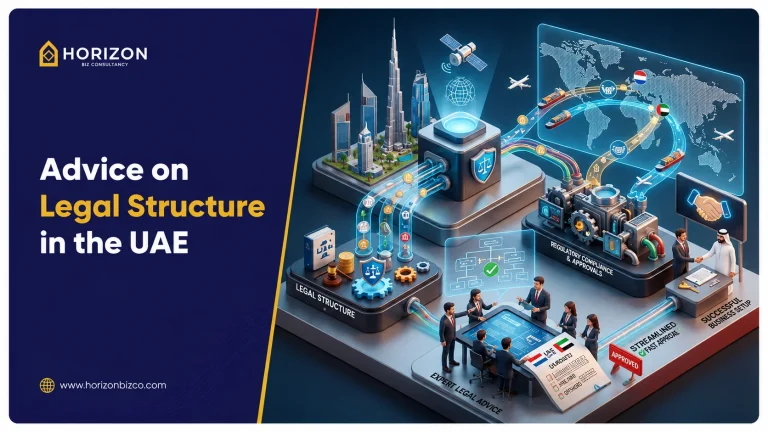
A Tech company (Company A) from the Netherlands has approached for consultancy with the requirement to set up a Legal entity in Dubai, UAE. Their purpose in establishing a company in UAE is to expand the business in UAE and GCC countries.
The CFO of company A, during the discussion, mentioned that they had considered setting up the company in Dubai Silicon Oasis Freezone in Dubai, UAE. Which they had requested assistance in advising on the appropriate legal structure which is best suitable for efficiently managing a business, tax planning and legality.
Understanding the given requirements, I studied their business model to discover the Nature of Business Revenue, Proposed Business contracts, Working capital requirements, Profitability, and taxation.
I also discussed preferences such as profit payout versus retention in the business.
I referred to the following documents:
- Corporate Company Law in UAE
- Dubai Silicon Oasis Freezone Legislations
- Double Tax Avoidance Agreement between UAE and Netherlands signed in 2007.
- UAE VAT Law
I considered the following legal structures:
- 100% Subsidiary Company of the Parent Company
2. Foreign Branch company of the Parent Company
1- 100% Subsidiary Company of the Parent Company
The Subsidiary Company will be a Limited Liability Company (LLC) legally independent entity incorporated in the UAE, with its own local Memorandum of Association. The LLC company will be taxed according to local UAE regulations.
2- Foreign Branch company of the Parent Company
A foreign branch, also called a representative office, refers to an extension of an existing overseas company that wishes to explore and target the local market. A branch office is not a separate legal entity. It remains an integral part of the parent company.
Following is the evaluation of a Subsidiary and Foreign Branch:
| Particulars | Subsidiary Company | Foreign Branch |
| Legal Status | Subsidiary company has clear independent legal standing | The branch office does not have a separate legal identity |
| Shareholding | Shareholders of the Subsidiary company, our parent company | There are no owners of the subsidiary company |
| Control & Governance | Shareholders and appointed managers can control operations. | The branch is governed entirely by a foreign parent company. |
| Operational Scope | Can fully operate as a legal entity and execute business transactions | It is governed as an entity of the Foreign company and more as a representative office |
| Liability | As the subsidiary companies are LLC companies, the liability is limited to share capital. | As a branch, liability lies entirely with the parent firm. |
| Profit Booking and Retention | The profit is booked by the subsidiary company and can retain the same as well. | The profit is booked by the parent company and cannot be retained by the branch company. |
| Indirect Taxation, i.e. VAT | For any local sales or services provided in UAE, VAT is applicable at 5% | |
| Direct Taxation | Profit is taxed as per the UAE regulations. Currently, there is no direct tax in the UAE. | The profit is merged with the parent company and taxed as per the regulations of the home country. The profit is taxed at 25% in the Netherlands. |
Considering the above points, we identified that the mentioned three major factors were in favor of the Subsidiary company
- Taxability – The subsidiary company’s profit will be taxed as per regulations of the UAE, i.e. 0%
- Liability – Liability of Subsidiary company is limited to share capital ∙ Control – Local General Managers and shareholders can manage the company efficiently.
Hence, I advised to incorporate a Subsidiary Company in UAE.
